


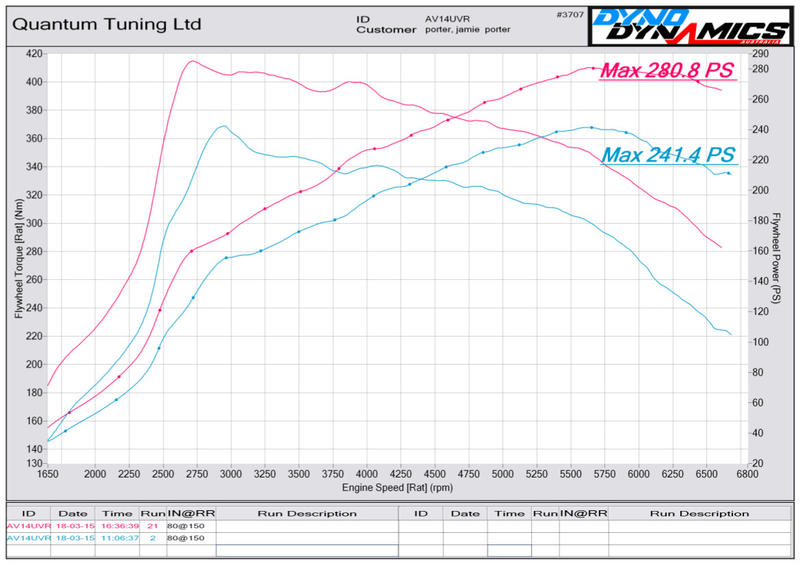
280 bhp not bad but the 420 nm of torque is really noticable
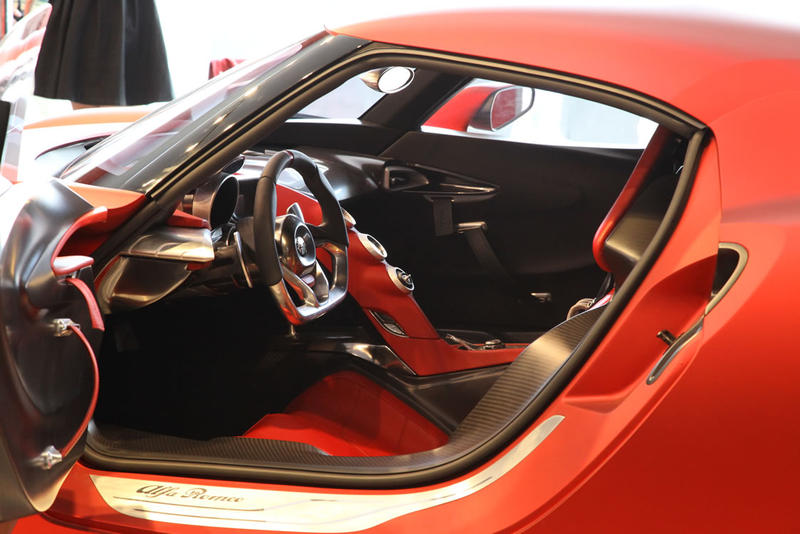
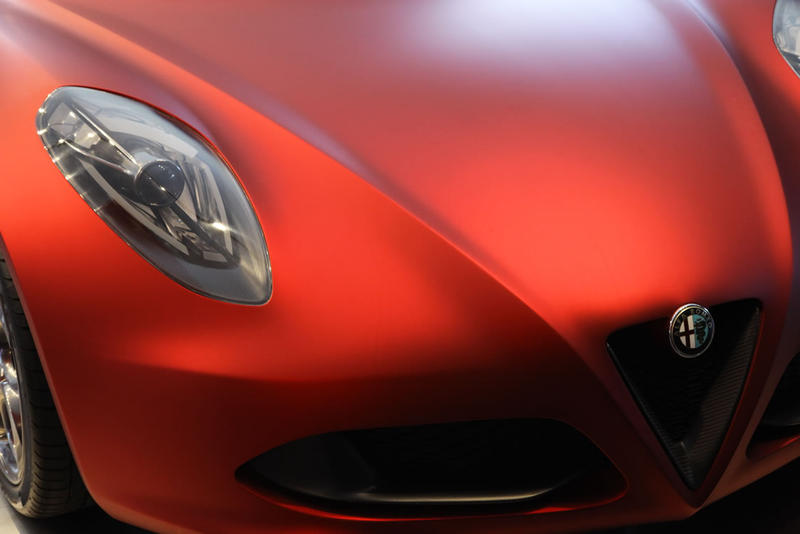
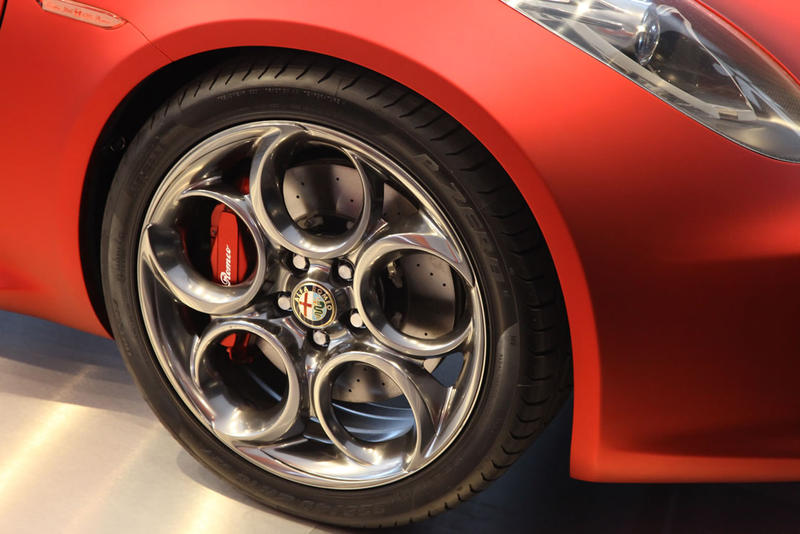

See our 4C specific web site for more info on the 4C
September 2016
Top gear's review of our Alfa 4C
July 2016
Evo's assessment of the Alfa 4C with a bit about our car at the end
July 2016
Piston heads review of our modified Alfa 4C
March 2016
Auto Italia's review of the 4C spider with Alfaworks suspension modifications on it
6th January 2016
Another good review, really well worth the read
26th March 2015
Having well and truly run our 4C in it has come to the point to do a bit of work on it so we have spent the day at our chassis dynamometer and we have teased quite a lot more power out of her. Figures so far are 280PS and 420Nm of Torque. Having done a quick calculation I think we have got the 0-60 time down to 3.8 seconds
4th September 2014
4th June 2014
Well at long last it has arrived, thanks to Alfa Romeo GB have got our hands on a 4C, we ordered the launch edition version way back in March 2013 and it arrived on the 20th of May 2014 and was the wait worth it?
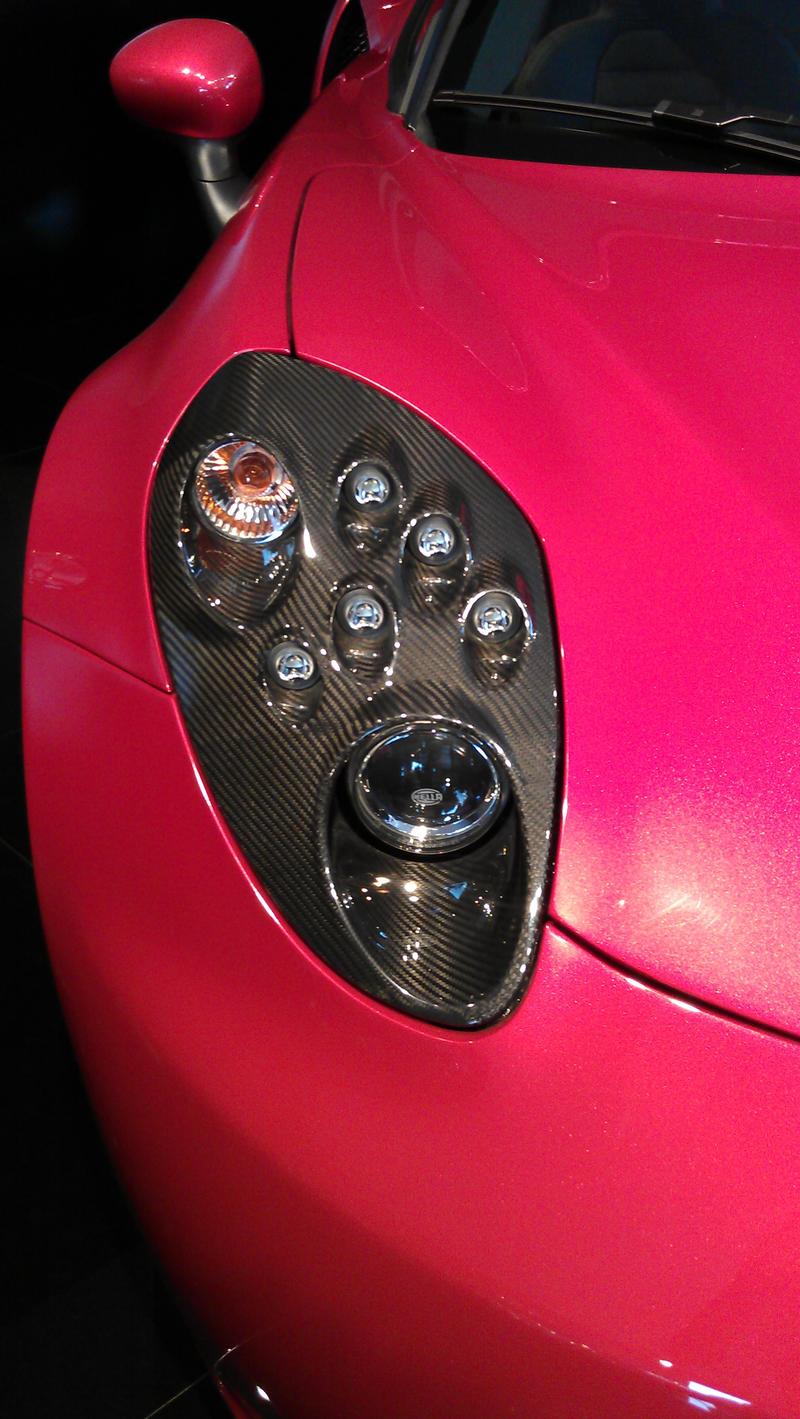
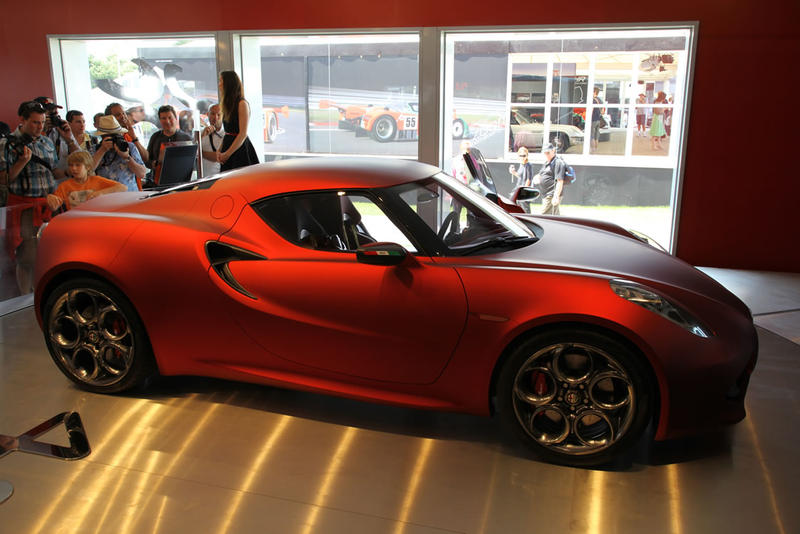
If you approach the 4C from the side it is quite diminutive, it makes a Giulietta look like an MPV, however, if you approach from the front the 4C looks extremely wide, this is a bit of an optical illusion as the car is so low it appears wider than it really is, however that said it is about an inch wider than a Brera so it is not small, the closer you get the more you find yourself looking down on top of the car, it is that low. It is worth taking a moment to look at the detail, the tailgate, the rear diffuser and headlamps are all worth more than a second glance.
Opening the door you are confronted by the chassis, it is there in your face, lovely, shiny and carbon fibre, and this isn't just a little bit of carbon fibre, it disappears off everywhere, under the front wing, down into the footwell, under the seat and back into the engine bay, If walking up to a 4C has not got you excited opening the door can't be anything other than an occasion.
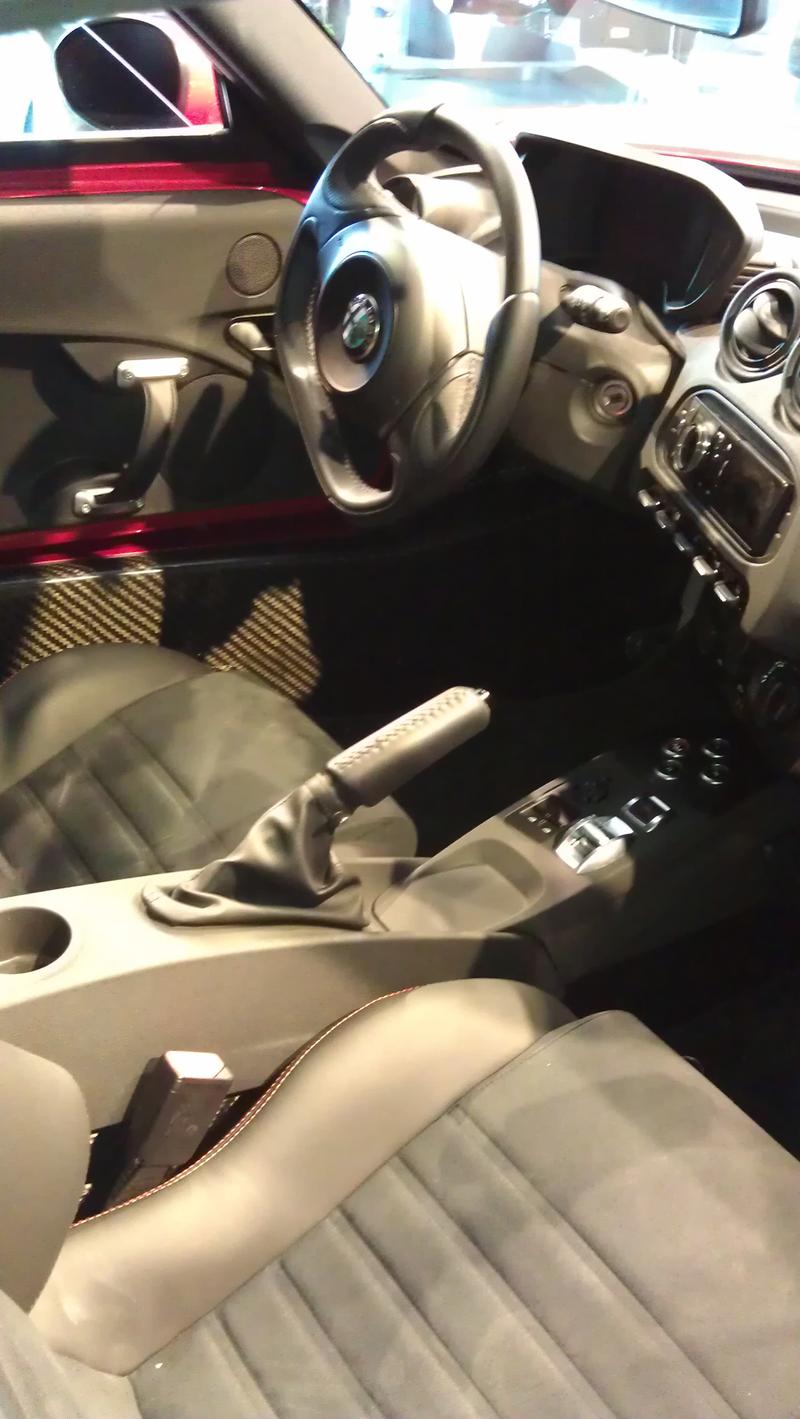
Sitting in the car the seat is firm, much like a Mercedes seat, the view forward is quite evocative, in some ways similar to a 105 series spider or a Bertone coupe, the bonnet is low in front of you with the cowls for the headlamps rising up either side, the dash is clear and concise and works well. As you approach the rev limit the rev counter changes to yellow as a warning that you need to change gear soon which is quite effective and intuitive, the controls are simple and self-explanatory, in fact, there is really little need to read the manual
This car is amazing, it is so nimble, it doesn't accelerate in the normal sense of the word, there is no significant effort at all on the cars part, you prod the accelerator anywhere above 1800 rpm and a giant hand pushes you back in the seat you look down and the speed indicated on the dash has gone from 50 to 60 miles an hour, you don't get to see the digits in between, they almost literally don't exist, think about it, the digital dash has to count from 0-60 mph in 4.5 seconds, if the dash displayed all the digits it would be an incomprehensible blur, if you try counting to 60 in 4.5 seconds and you will get to understand what I am saying, it's ridiculous! Then you apply the brakes and, wow, the reverse happens the 4C shoves its nose on the floor and stops. Cornering requires care with the throttle as the throttle significantly affects the balance of the car, applying too much throttle reduces the weight on the front wheels which is interesting!
In answer to the question was it worth the wait, yes it was, even if you get a little bit frustrated at times bear with it it is definitely worth it.
23rd October 2013
Shhh Secret. Don't click if here if you're too easily excitable
22nd October 2013
Quote, Lord Clarkson the omnipotent
"I shall make no bones about it. I loved this car. It's like being at the controls of a housefly. You can brake later than you think possible into corners, knowing that there's barely any weight to transfer. And it has so much grip. Then there's the noise. Or rather noises. It makes thousands. All loud. All mad."
21st October 2013
<iframe width="400" height="300" src="http://video.alfaromeopress.com/p/it/en/alfaromeo/post/30578/video/149467?embedded=1&mini" frameborder="0" scrolling="no"></iframe>
30th September 2013
Quote, MSN:-
"there's no denying the amazing ability of the chassis and the car's superb performance on road and track.
It's not without fault, the 4C, but it is a very well-executed sports car, and at £45,000 with that stunning carbon fibre chassis, it's a very appealing proposition and surprisingly strong value for money. Alfa is back. And how."
28th September 2013
Quote The Telegraph:-
"Global production of the 4C is limited to 3,500 units per year. Most people think Alfa can sell a lot more than that, but apparently, the production of its carbon-fibre chassis is a bottleneck. That's why prospective buyers are invited to register their interest now for deliveries in late 2014.
Form an orderly queue, you won't be disappointed. Even if it's not remembered as the car that saved Alfa, it will be remembered as one of the greatest sports cars of the age."
27th September 2013
Quote Road and Track:-
"Approaching in the oncoming lane, the mid-engined Alfa Romeo 4C looks every bit as exotic as a Ferrari. It has, after all, about the same width-to-height proportions as a 458 Italia. It is impossibly wide, incredulously low, and breathtakingly beautiful.
And then it flies past with triple-digit decibels of anger exploding from its tailpipes, punctuated by the whip-crack misfire induced as its computers orchestrate a 130-millisecond gearchange. The noise is pure Ferrari, in loudness, fury, intensity, and timbre."
Quote Car and Driver:-
"A Ferrari engineer once told me that his company obtained a C6 Corvette a few years ago to see what the fuss was about. Assuredly, the foreigners pummeled the poor thing down to a grease spot. The Vette is big, loud, and fast, the engineer concluded, but, a little bit crude, no? He said the last part with a smirk. My Yankee spine stiffened and I said that before I'd agree, I'd want to see what a $50,000 Ferrari drives like.
I just found out. Mamma mia and holy mother of Gorgonzola.
Kids, you better hide your college funds, because temptation's real, reachable, I-can-do-this-if-I-just-reorganize-a-few-priorities temptation is about to kick down the front door in high heels and leather. If dad can resist the thing, pass his phone number to the Pope."
"in the wake of the rare-as-moon-rocks 8C Competizione coupe and Spider that were sold here last decade, Alfa will re-re-launch itself with the 4C. It's a delightful espresso cup of nitro that will be built at Maserati's Modena plant and land in U.S. Maserati showrooms next spring with a base price around $55,000, a number we hope won't turn out to be another broken promise. Just 1200 per year will be imported, the first 400 as loaded up Launch Editions. To find your nearest dealer, simply follow the riot police."
24th September 2013
Quote Autocar:-
Should I buy one?
This 4C is an excellent driver's car, although it won't suit everyone. It has a few flaws. Some will say a Porsche Cayman is more 'grown-up' and 'finished', and they are right. It is certainly more of a car that you could easily drive to work.
But, put frankly, two hundred Britons a year will not care a damn. They will not be thinking about Porsches. They will be Alfa 4C owners, and they will have discovered one of those cars - and at only £45,000 - that truly stands apart from the rest.
Quote, Jamie Porter:-
Eat your heart out tutons!
Quote Patrick McGoohan, The Prisoner:-
I am not a number. I am a person.
17th July 2013
We went to the Goodwood festival of speed to see the Alfa 4C amongst other cars and I was very impressed with it. It is a real car, Like most of you I was expecting a lightweight special like a Lotus Exige, you know, lightweight doors that feel unsubstantial, wrong, the doors and tailgate feel just like a Golf's they have that sort of weight to them, everything on the car has the feel of a quality car, not a lightweight track missile. The car is reasonably easy to get in and out of considering it is just over a meter high, a lot more accessible than the Lotus but it does have a high sill so it would be difficult to exit demurely if you were wearing a short skirt as my wife pointed out but as I don't wear them that is not a problem. The door aperture is longer than the Lotus's which does help.
Climbing inside the cabin is cosy but not cramped and it feels well put together the switches are positive and the gear change behind the steering wheel comes immediately to hand, it has a nice long paddle and that does help. The seats are very comfortable and being a mix of cloth and leather they felt very supportive and you did not feel as if you were going to slide out of them while cornering. The car Alfa had at the show was left-hand drive and I find that some cars like the SZ can be slightly intimidating when you first get in them and difficult to place on the road, the 4C felt as if you would be able to place it to within a millimetre, it is quite unusual that I immediately felt at home in the driver's seat of a left-hand drive car, it usually takes a couple of minutes for me to get acclimatized. Looking carefully at the car you can see area's where weight has been saved the door glass is thinner than you are used to in say a Brera, the bells of the disk brakes are made of Aluminum, little things that all make a difference, all there to keep the dry weight down to 895 kg. With fluids on board, I would expect the car to tip the scales at around 925 kg.
The 4C does not have a boot at the front, the access to the brake fluid is therefore only by a garage. To open the boot there is a release in the back of the passenger door shut. On lifting the boot lid you are at first amazed by how heavy it is on such a lightweight car. There is a small boot at the rear which is only suitable for soft bags and the engine is just in front under a plastic cover, being brutally honest the engine does not look at all impressive, this is not a Busso V6, I know it is technically very impressive but it just doesn't cut the mustard visually. The petrol tank is mounted somewhere in the middle of the car, it is not totally obvious where but the filler is on the right-hand side of the car in the buttress, when you open the flap it is a little surprising to find that there is no petrol cap, just the hole for the petrol pumps nozzle.
The 4C looks stunning in the metal however there is one issue with the launch edition car that divides opinion, the headlamps and their surround, I am not sure that I like them when you compare them to the concept cars headlamps which have the main beam unit suspended on three supports, really cool!
Overall the 4C is an impressive car and it is nicely built but at £50,000 ish it is up against Porsche who is renowned for their build quality and the Lotus Exige which has 100 more bhp so it will be interesting to see who buys it, is there enough Alfsti to justify production of say 15,000 cars without having to find new customers?
13th April 2013
£52,000 that is all it is going to cost to buy a real Alfa Romeo, if you hear anyone call it a mini Ferrari lay them out but only after reminding them of who's the Daddy! The 4C was released on the 4th March 2013, remember that day it is the start of something new. We have one of the most advanced chassis in existence. This is the stuff of dreams, you would have to pay way over double this price to get anything like this specification anywhere else.
A while back, probably 6 years ago, there was a discreet link-up between Lotus and Alfa Romeo where Lotus was going to put the classic Busso V6 into the back of the Elise which would have been interesting. However, Lotus in its usual style started to make the chassis more and more complicated and eventually it came to nothing, however, I suspect that Alfa Romeo's engineers may have taken more than a passing interest in the project as the Elise and the 4C are very similar concepts.
So where does the Alfa Romeo 4C fit into the marketplace? That is a difficult question as no major manufacturer has made anything quite so hardcore before, as I said in the previous passage Lotus was the only real competition and in ten years of production they only managed to produce around 20,000 cars and you have to remember that most of the Elise's were convertibles, not Coupe's. Lotus only produced around 1000 Coupe's while Alfa Romeo intends to produce around 45,000 4C coupe's. Then there is the Porsche Cayman, the 4C is in a different league as it is 400kg lighter! Every horse has to propel under 4kg with the Alfa while every Porsche pony has to carry 4.8kg that is quite a difference when you are at this level. There is, of course, the Audi TT which really isn't worth mentioning at all, in fact, why did I waste words with it. So in reality, Alfa Romeo in the UK is going head to head with the British kit car manufacturers, which is an interesting concept as the main reason for the success of this sector is in its flexibility and ability to respond. However, against the depth of knowledge that a large manufacturer has available to it and its ability to transfer technology, this may pale into insignificance; we shall see.
So Alfa's offering, the 4C, what is it? The basis of the car is an extremely lightweight carbon fibre tub in which the driver and passenger sit, this weighs in at 52kg. Bolted to the front and back are two aluminium subframes that take the suspension and engine mountings and are also designed to absorb energy in case of collision. Front suspension in the very best of Alfa Romeo tradition is by double unequal length wishbones, while at the rear the design utilizes a McPherson strut. The engine is mid-mounted and sits to the right-hand side of the car. The engine while mid-mounted is essentially the same one that is in the Giulietta and sits just in front of the axle line, this gives a 60/40 weight bias to the rear without passengers, with say 160kg of passengers the weight distribution will be much nearer 50/50. The beauty of a mid-engined design is not necessarily that the weight is distributed evenly over both wheels it is more due to the weight being centred in the middle of the car, this gives the car a low polar moment of inertia and so it will change direction much more easily. If you have driven an Alfetta and managed to get it out of line you will be aware that you need very quick reactions in order to catch it, an Alfetta has a high polar moment of inertia as the engine is way out front and the gearbox is hung out of the rear of the car.
The Alfa 4C uses a lot of the technology that has been developed for the Giulietta and this is where it has an advantage over the kit car manufacturers. It is going to use the 6-speed TCT transmission, this is one of the modern generation of twin-plate clutch transmissions that can change gear nearly instantly. TCT and its predecessor Selespeed gearboxes do take a bit of getting used to but once mastered are quite fun to drive. Selespeed being a single plate design was a lot slower than the TCT system which already has the next gear engaged ready to change while selespeed has to change gear between disengaging the clutch and re-engaging it again. The TCT transmission is connected to the engine management system which controls all throttle inputs. The dynamics of the car are governed to some extent by the DNA system, which like other modern Alfa's modifies the throttle and anti-lock braking systems responses. The 4C also adds another function to the system; RACE mode. To enter RACE mode push the DNA lever forward and hold it there for 5 seconds, this switches the vehicle dynamic control off completely except when you have your foot on the brake, which sounds very interesting.
The engine is the 1750 turbo, this is an all-aluminium direct-injection four-cylinder where the fuel is injected straight into the combustion chamber, not onto the back of the inlet valve as an older type fuel injection systems used to do. One advantage of this is that the air coming into the engine is clean and has no fuel in it at all, this means that you can use the variable timing on the exhaust cam to keep the turbo spinning. This is done by leaving the exhaust valve open as the piston rises in the bore and the force of the air coming out of the open valve keeps the turbo spooled up, so when you next apply the throttle there is no turbo lag. The engine is slightly more powerful than in the Giulietta thanks to a slightly modified inlet and exhaust manifold system. The 1750 engine kicks out 240 bhp @6000 rpm (which is OK with only 895kg to propel) however the thing that will really impress is the torque, 80% of maximum torque is developed at just 1800 rpm. This should mean that o matter what speed you are dawdling along at if you floor the throttle it will take off like a scalded cat, and if you are trying to make an impression off the lights you should be able to reach 60 mph in around 4.3 seconds.
Braking will be by Brembo 4 pot callipers on the front onto 305mm disks while the rear has TRW callipers on 292mm disks. The disks are ventilated all round and are very similar in size front and rear, that is due to the 60/40 weight distribution as discussed earlier, with more weight at the rear you can apply more braking and get the car to stop faster. The brake bias is 65% to the front and 45% to the rear. Enveloping the brakes on the front are some lovely 205/45 17 Pirelli P Zero's with 235/40 18's on the rear of the standard car, however, if you get the RACE suspension you get upgraded to 205/40 18's on the front with 235/35 19's on the rear.
So, in my opinion, how good will it be? After the swinging criticism of the 8C's handling Alfa Romeo are not likely to be in a mood to let the handling disappoint. From what I have heard on the grapevine the 4C can pull 1.1g through a corner and the last Alfa Romeo that could just about manage that was the SZ which saw 1.1g for very short periods, that together with the blistering sprint to 60 mph and a top speed of over 155 mph this should be a very, very good car.
6/3/2013
At the risk of being a little smug as always, the Alfa workshop is the most reliable source of information about Alfa Romeos on the web, three whole years ago we promised you the 4C, yesterday it was launched, we said it would have the 1750 engine, correct. We said it would have the TCT paddle-shift correct again, we promised you 235 BHP you got 240 BHP we said it would tip the scales at 850 Kg it weighs in at 895Kg, if its Alfa it is here!
So what is the 4C? It is a carbon fibre monocoque chassis with aluminium front and rear subframes with an integral roll hoop, clothed in composite outer panels. It is powered by a 1750 turbocharged engine that produces 240bhp and it has proper low down torque, this baby will move like lightning if you prod the accelerator at 2000 rpm and will only stop when it hits the rev limiter, 0-60 4.3 seconds with 100kmh coming up .2 of a second later. The 1750 engine has variable camshaft timing on inlet and exhaust camshafts and direct injection into the combustion chamber. Alfa Romeo uses the variable cam timing to help reduce emission's but also to practically eliminate turbo lag. It does this by leaving the exhaust valves open for as long as possible, using the compression stroke of the engine to keep the turbo spooled up. Because it is a direct-injection engine there is no fuel mixed in with the inlet charge so there is no chance of harmful emission's.
The suspension is classic double wishbones at the front with four-pot Brembo brake callipers acting on 305 mm ventilated disks, the rear end is supported on McPherson struts with TRW rear brake callipers acting on 292mm ventilated disks, that should stop it! Alfa Romeo has also promised that "for those wanting the maximum in terms of handling, a complete suspension kit will be available with a specific calibration of the shock absorbers and rear anti-roll bar" which sounds very interesting!
The price for all this loveliness is £52000 for the limited edition "launch edition" while I still suspect the standard car will be around £45000
7/2/2013
The 4C is getting nearer, there are spy shots of it everywhere on the internet and they are appearing in disguise all over the world (well in the USA and Italy anyway). We are getting leaks from everywhere as to the specifications, it has got to be the worst kept secret in the world. As I predicted nearly three years ago (see below) it will have a 1750 TBi engine producing 235 bhp and weighing in at a lightweight 850 KG, remember you heard it here first! The car's mid-engine configuration will help with road holding and after the supposed issue that Alfa Romeo had with the handling of the 8C Coupe I expect that this car will be absolutely sorted from the launch, the suspension is double unequal length wishbones at the front with Macpherson struts on the rear. The thing that I really cant wait to see is the little details have a close look at those headlamps, they are gorgeous and the interior does look like a very special place to be. The chassis tub will be a carbon fibre with Aluminium hardpoints as on the prototype and I suspect that it will be produced at Maserati's factory at Moderna at a rate of around 2000 units per year.
The cost of this little beauty is likely to be just under £50,000 on the road, if you can get one!
8/6/2011
Well, they are going to produce the 4C all be it in limited numbers so you need to get your order in now if you want to stand any sort of a chance of getting one. The 4C will have the 1750 TBi engine and it will be producing 235 bhp. The gearbox will be a twin-clutch paddle-shift type and the power train is going to be the same as the Giulietta Cloverleaf. After headlining a weight of 850 kg I expect that to be right on the money. These figures put the 4C head to head with the Lotus Exige which is a hard act to follow. The Alfa Romeo chassis has had a lot of input from Dallara in its design but the production of the chassis is almost certainly subcontracted out to another company. Dallara's chassis expertise is almost unrivalled and I will be very disappointed if it is not at least as good as the Lotus's.
1/3/2010
Well now what is this, the Alfa 4C looks as if it is going to be produced and in my humble opinion it is exactly what the marque needs at the moment, the GTV is now long dead and the GT is at the end of its production run so Alfa need a coupe and this will do the job nicely. It is quite a radical departure for Alfa Romeo, I can't think of the last time Alfa made a mid-engined production car (you can't really call the Stradale a production car), the Montreal was very nearly mid-engined but they moved the engine upfront at the last second which was a shame. The 1750 TBI engine produces 235 bhp and that should propel the car along well especially if they can keep the weight down to 850 Kg. I expect that the 4C should be able to top 150 mph and have a 0-60 time of around 5 seconds, a real mini Ferrari. As for looks you really can't improve on what looks like a cross between a Lotus Elise and a Lancia Stratos, wow
Related Links: Alfa Romeo 4C Parts | Model Reviews